A good pergola can turn a patch of lawn into a room that just happens to lack walls. Shade, filtered light, a sense of privacy, and the pleasure of sitting under living green, all of that happens when the structure and the planting work together. In the Piedmont climate, especially around Greensboro, that partnership depends on choosing vines and companion plants that are honest about heat, humidity, and the occasional ice event. Over the past dozen years designing and maintaining outdoor rooms across the Triad, I’ve learned which plants make a pergola sing here, and which ones ask for more babysitting than most homeowners want to give.
This guide blends plant picks with placement, pruning, irrigation, and small design choices that separate a tidy, lush pergola from a tangled disappointment. If you’re weighing options for landscaping in Greensboro NC, and you want that pergola to carry its weight spring through fall, read on.
How Greensboro’s Climate Shapes Pergola Planting
Greensboro sits in USDA Zone 7b to 8a depending on your exact location, with summer highs that linger in the upper 80s and occasional spikes into the mid 90s. Humidity is not shy, which encourages fast growth and, unfortunately, mildew on susceptible plants. Winters are mild but not wimpy. Expect nights in the 20s for short stretches, the odd single digit snap every few years, and one to three ice storms per decade that can load vines with weight they weren’t meant to carry.
Rainfall typically totals 40 to 45 inches annually, with pop-up storms in summer and longer soaking rains in winter and early spring. That pattern is friendly to deep-rooted, drought-tolerant vines once established, but new plantings still need disciplined irrigation the first season.
Filtered shade matters under a pergola. If your rafters are tight and you add slats on top, most sun-loving vines will adapt, but flowering may dip unless they still get a few hours of direct sun. In dense tree canopies or north-facing yards, lean toward plants that tolerate bright shade.
The Right Structure for the Right Plant
Before we talk plant names, consider the wood and joinery. Wisteria and trumpet creeper can snap flimsy crossbeams in a few years. Even lighter vines, when wet and iced over, add surprising weight. For most vines in this region, I spec 6 by 6 posts, 2 by 8 beams, and 2 by 6 rafters or better, all in pressure-treated pine or cedar. If you’re chasing the best landscaping in Greensboro NC with professional carpentry, ask the builder about post depth, hardware, and load to ensure your pergola can handle the mature plant, not just the nursery pot.
Integrate wire guides or trellis panels where you want vines to climb without wandering into gutters or soffits. Stainless steel cable kits mounted to posts keep growth trained tight and tidy, and they make seasonal pruning easier. A foot of clearance between the vine and any siding will save you headaches with ants, rot, and paint.
Evergreen, Deciduous, or Mixed: Setting Four-Season Expectations
Evergreen vines offer privacy in January, but they’re not always the showiest bloomers. Deciduous vines often deliver fireworks in spring or summer, then drop leaves to reveal beautiful architecture. Some clients want year-round cover, others prefer winter sun on the patio and a lighter feel. A mixed planting, two vines with different peak seasons on opposite corners, often gives you the best of both.
I like to think in layers. Use an evergreen for structure, then weave in a seasonal star for color. Keep in mind that two aggressive vines on the same beam can turn competitive quickly. Choose one boss, one polite roommate.
Native Workhorses I Count On
Carolina jessamine, Gelsemium sempervirens, is a staple across landscaping in Greensboro. It’s evergreen to semi-evergreen here, twining rather than clinging, and it loves a sunny pergola with well-drained soil. The trumpet-shaped yellow flowers in March and April are a welcome jolt after winter. It grows 10 to 20 feet, enough to roof a pergola without burying it. Give it a wire to wrap and a once-a-year trim after bloom, and it will mind its manners. I’ve used it on west-facing patios where reflected heat cooks fussier vines. It held its color even after the 2022 cold snap.
Crossvine, Bignonia capreolata, is the hummingbird magnet that often surprises people. It wakes up early, sometimes in late March, with orange to red tubes that flare like little bells. This one is semi-evergreen, more evergreen on sheltered sites. It climbs with tendrils and adhesive disks, so it sticks to wood without help. That’s convenient, but if your posts share space with painted trim, give it boundaries. A post and a cable grid keep it off the house. Mature length hits 30 to 50 feet in the wild, but on a pergola you can prune it hard once a year after bloom to keep it compact.
Virginia creeper, Parthenocissus quinquefolia, earns its place for fall color and sheer speed. It’s deciduous, with a reliable red in October that lights up a backyard. It grabs with adhesive pads similar to Boston ivy, so again, avoid letting it onto finished surfaces. Some years, I use it as a temporary cloak while a slower vine gets established, then thin it out. It tolerates more shade than the bloomers, which helps if your pergola sits under a large oak.
American wisteria, Wisteria frutescens, is the wisteria that behaves. Chinese and Japanese wisterias are beautiful bullies here. They can girdle posts, invade eaves, and bloom less reliably after hard pruning. American wisteria grows 15 to 30 feet, blooms on new growth from late spring into summer, and doesn’t develop the trunk-like weight that breaks beams. The flower clusters are shorter than the imported species, but the scent is sweet, and you can shape it into clean lines. If you want the wisteria look without the regret, pick a named cultivar like ‘Amethyst Falls’ and put it on a sturdy, prunable frame.
Long-Blooming, Low-Drama Favorites
Confederate jasmine, Trachelospermum jasminoides, pushes the edge of hardiness in cold winters, but in Greensboro it usually rides through with minor leaf bronzing. It’s evergreen, needs a trellis, and blankets a pergola in fragrant white stars from late May into June, with a lighter repeat later in summer. Plant it on the sunnier, wind-sheltered side. During the 2018 ice event, plantings on exposed hillsides suffered more damage than vines tucked against brick walls.
Coral honeysuckle, Lonicera sempervirens, is the native honeysuckle you want, not the invasive Japanese kind. It is semi-evergreen, offers nectar-rich red or coral tubes, and keeps trickling out blooms from late spring into fall if you deadhead. It twines modestly and responds well to light summer pruning. Powdery mildew can appear in stagnant air, so open up the canopy if the foliage starts to gray.
Climbing hydrangea, Hydrangea anomala subsp. petiolaris, is for patience and shade. It clings with aerial roots, which means it needs a rough surface or a wire lattice. It takes a few years to settle in, then rewards you with lacecap blooms in early summer. On pergolas, I use it on posts and lower bays, not on the roof, because it prefers dappled light and cool feet. If you want a hydrangea feel in more sun, a hybrid like ‘Miranda’ with variegated leaves adds brightness even in off-years.
Passionflower, Passiflora incarnata, the native maypop, lives fast. It’s deciduous, throws alien-looking lavender flowers starting in summer, and can spread by runners. On a pergola, I install root barriers at planting or confine it to a large container set against a post. That solves the wanderlust and lets you enjoy the fruit for teas or jelly. It handles heat, drought, and sandy soils better than most.
Flower Power Versus Practicality
Clematis tempt many homeowners, and rightly so. The large-flowered hybrids can be showstoppers, but they prefer cool roots and steady moisture. In Greensboro’s clay, that means amended planting holes and mulch, plus a bit of afternoon shade. On a pergola, I tuck clematis into the middle zones where they can climb into dappled light under a taller evergreen vine. Choose pruning groups based on how much time you want to spend with shears. Group 3 types, which bloom on new wood and get cut back near the ground each late winter, are easiest to keep tidy on a shared support.
Roses on pergolas carry romance and maintenance in the same sentence. Heat-tolerant climbers like ‘New Dawn’, ‘Lady Banks’, or some of the newer disease-resistant ramblers can perform well, but only if you commit to tying canes horizontally, which encourages more flowering laterals. In my experience across landscaping in Greensboro, the biggest complaint with climbing roses is black spot in humid summers. Choose cultivars bred for Southern disease pressure, space them to breathe, and be ready with a weekly rinse of the canopy to knock off spores if a wet stretch settles in.
Site, Soil, and Water: Getting the Foundation Right
Clay dominates here, often heavy and slick when wet, brick-hard when dry. Roots hate that swing. At planting, I loosen a hole two to three times as wide as the pot, not deeper than the root ball. The plant should end up slightly high, a half inch above grade, to avoid water pooling at the crown. I mix in two parts native soil to one part compost, plus a small dose of slow-release fertilizer. Pure compost encourages the roots to circle in the fluffy zone and never venture out.
Mulch with https://grok.com/share/c2hhcmQtNA%3D%3D_98a33dbc-e6cf-45a4-b3ee-43b7092e4439 three inches of shredded hardwood or pine bark, pulling it back from the stem. Irrigate slow and deep the first summer. I like a 1 gallon per hour emitter on each side of the root ball, run 60 to 90 minutes twice a week in heat, adjusted for rain. Smart controllers help, but nothing beats a hand check. If the top two inches are dry and crumbly and the plant is newly set, it needs water. After year one, most of these vines prefer less pampering.
Training and Pruning Without the Drama
Vines are honest. If you don’t give them something to climb, they’ll grab what’s close. For twining vines like jessamine and honeysuckle, start with soft ties every 8 to 12 inches on their main shoots, spiraling them up posts. For adhesive climbers like crossvine, encourage a single leader until it clears head height, then let it branch over the rafters. I tell clients to think in thirds. Keep the bottom third clean and leggy to avoid mildew and pests along seating, let the middle third feather in to shade, and let the top third provide the roof.
Timing matters. Prune spring bloomers right after they flower. Prune summer bloomers in late winter before growth starts. For evergreen vines, a light shaping in late winter and a touch-up after peak bloom usually keeps them in bounds. Avoid heavy fall pruning, which can push tender new growth that winter knocks back.
When a vine gets away from you, don’t buzz-cut it. Find the base, trace a few main canes, and selectively remove the oldest wood back to a newer lateral. That approach reduces stress and keeps the plant flowering. For aggressive species like trumpet creeper, a root barrier or periodic root pruning with a sharp spade around the planting hole perimeter can prevent unwanted shoots in nearby beds.
Pairing Underplantings for a Finished Space
A pergola looks more settled with ground-level planting that softens posts and roots the structure in the yard. In Greensboro, I like a mix that handles morning shade, afternoon sun, and runoff from the roof, because all three can happen around a pergola zone.
Think in textures. A skirt of autumn fern and hellebore on the shadier side gives winter presence and spring flowers. On sunnier edges, thread in dwarf ornamental grasses like ‘Hameln’ fountain grass or little bluestem cultivars. For color punches that carry heat, use lantana or salvia in containers at the corners, where you can swap them as seasons turn. If you’re pushing for the best landscaping in Greensboro NC, these combinations feel intentional without needing a weekly gardener.
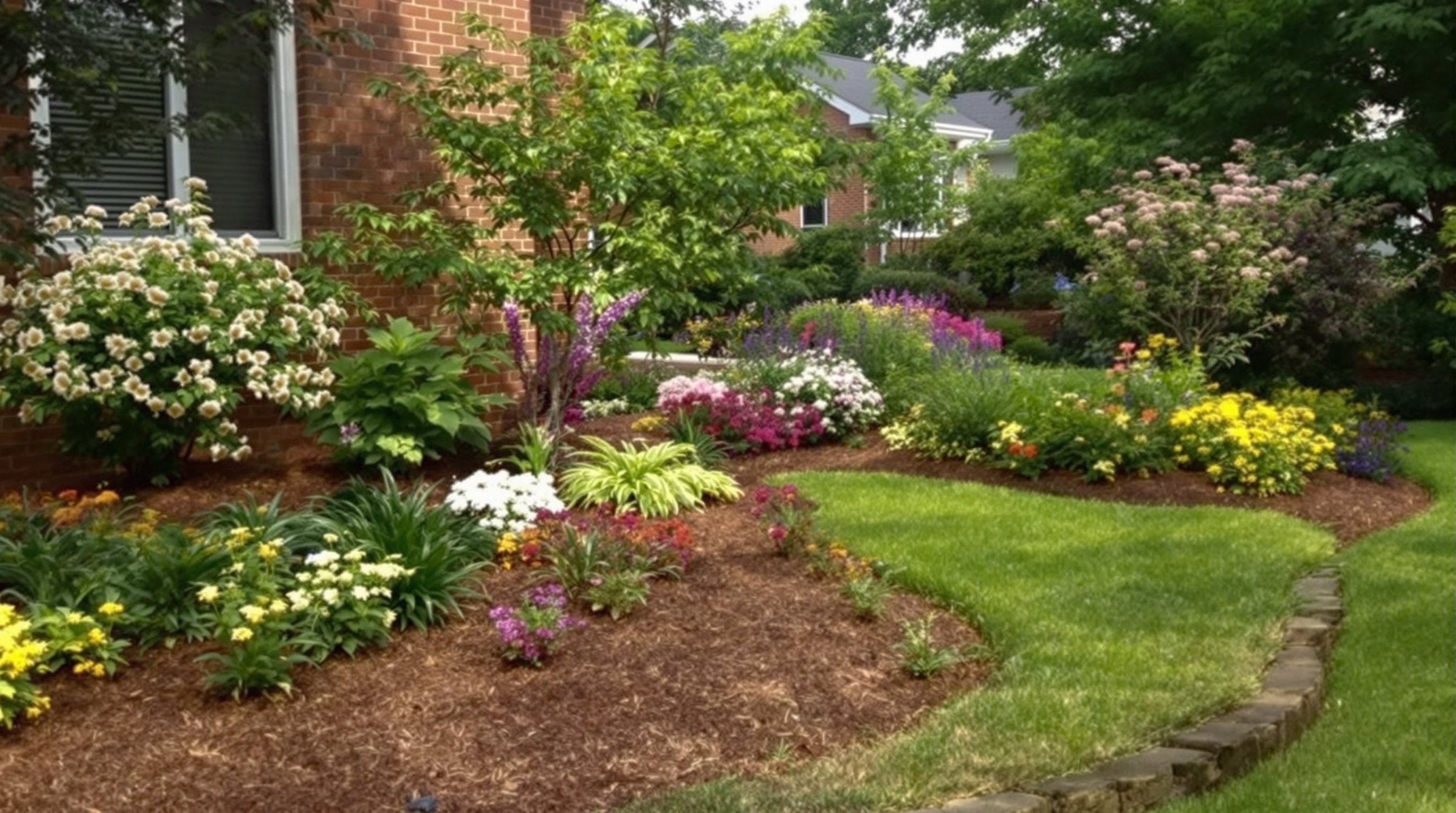
Be cautious with thirsty plants directly under dense canopies. They will always lose the water race to the vine. Instead, choose tough groundcovers like ajuga, sedum, or mondo grass that shrug at dry spells once established.
Pest and Disease Reality Check
Our humidity means powdery mildew and leaf spot are not strangers. Honeysuckles can gray up in still air. Roses will black spot during a wet June without resistant genetics. Jessamine is generally clean but can show leaf browning in compacted soil.
Mites appear in prolonged heat and drought, especially on vines baking against light-colored walls that reflect heat. You’ll see stippling or fine webbing. A strong water spray under leaves every week or two knocks them back. Caterpillars will occasionally skeletonize leaves on crossvine or passionflower. I leave them be unless defoliation reaches half the plant, which is rare.
Stay ahead of scale insects on evergreen vines. They hide on stems and exude sticky honeydew. A late winter application of horticultural oil at labeled rates smothers overwintering forms without harming beneficials. Avoid broad-spectrum insecticides in high summer. They do more harm than good in a landscape trying to support pollinators.
Real-World Combinations That Work In Greensboro
One of my favorite builds in Fisher Park used a cedar pergola with crossvine on the sunny south beam and clematis viticella weaving through the middle. The crossvine delivered a month of hummingbird fireworks in April and May. The clematis picked up in June with purple bells and zero fuss. Below, a line of ‘Kaleidoscope’ abelia gave low variegation and fragrance, while containers rotated edibles and annuals for fun. That mix held interest from March through frost.
Another project near Lake Jeanette needed winter privacy from a neighboring driveway. We used evergreen Confederate jasmine on two posts, with American wisteria on the opposite side for late spring bloom and summer shade. The jasmine bronzed slightly in January but stayed dense. The wisteria flowered on new wood each June and kept the patio cool and dappled by July. The homeowner learned to prune the wisteria back hard each February, then a light shaping in August. It took 30 minutes with loppers and paid for itself in controlled growth.
For deep shade under mature oaks in Irving Park, climbing hydrangea on the posts with a lower veil of native muscadine grape across the rafters provided a rustic, woodland feel. Muscadine is vigorous, so we used 1 by 7 stainless cables with turnbuckles, and we prune to a cordon system like a vineyard. The clients get fruit in late summer, birds get a feast, and the hydrangea flowers float against dark bark in June.
Water, Sun, and Seating: Comfort Matters
Plant choice is half the comfort equation. Orientation and airflow are the other half. A west-facing patio with a dark paver surface will radiate heat well into the evening. If that’s your reality, pick vines with denser summer foliage and choose light-colored cushions, then consider a ceiling fan rated for outdoor use under the pergola to keep air moving. A fan doesn’t just cool people, it also discourages mildew and mosquito loitering.
On a north-facing patio, spring comes later. Early bloomers may sulk. Lean into foliage interest and fragrance from jessamine or shade-tolerant species rather than chasing sun lovers that will always struggle. You’ll still have a calm refuge when July’s sun drives everyone else indoors.
Irrigation lines should be tucked and serviceable. Run a dedicated zone for the vine bases, not a shared lawn zone that blasts them with spray from 20 feet away. Emitters at the root zone waste less water and prevent splashing that spreads disease. If you hire pros for landscaping in Greensboro, ask to see the drip plan drawing before installation. A clean plan on paper almost always leads to a cleaner result on the ground.
Avoiding Common Pergola Planting Mistakes
- Choosing an aggressive vine for a lightweight pergola. Trumpet creeper and Asian wisteria belong on barn-grade beams, not on a kit with fussy hardware. Planting too close to posts. Leave 8 to 12 inches from the post face to the vine’s center. Crowding invites rot at the base and makes future post replacements a nightmare. Ignoring the house-siding boundary. Adhesive climbers will find painted trim. Give them a clear path up, then out, and clip scouts the moment they wander. Overwatering established vines in summer. Many sulk in wet feet and show it as yellowing leaves. Check soil before turning on the hose. Pruning at the wrong time. If you remove flower buds in late winter from spring bloomers, you buy a leafy summer and a quiet spring.
Containers on Pergolas: A Smart Compromise
If you rent or you’re unsure about permanent plantings, containers can give you the pergola look with less commitment. A 20 to 24 inch pot with high-quality potting mix and a built-in trellis can host passionflower, mandevilla, or annual vines like hyacinth bean. Container-grown vines respond faster to cold and heat swings, so they need more attentive watering. You can winter pots against a south-facing wall and wrap them in burlap on the coldest nights. Treat the first year as a test. If the effect delights you, then install in-ground vines in year two.
Cost and Care: What to Expect
Installed costs vary with plant size and the need for added trellising. In Greensboro, a 3 gallon vine with basic training wires typically runs in the low hundreds per post when handled by a professional crew, including soil prep and drip line installation. Larger specimens in 7 to 15 gallon sizes can triple that number, but they buy you a year or two of maturity. Ask your landscaper for a first-year care schedule in writing. You’ll want irrigation timing, pruning windows, and a quick textable checklist for midseason touch-ups.
Maintenance time depends on species. A well-sited jessamine or coral honeysuckle might ask for two hours per season. American wisteria will take twice that between winter shaping and a summer tidy. Climbing roses reward attention but require it, from tying to disease monitoring. Budget not only dollars but also interest. If you enjoy a pair of sharp shears and a glass of iced tea in June, you can handle most vine care. If that sounds like a chore, choose the low-drama natives and let them do the work.
Where Professional Help Makes Sense
There’s a difference between a pergola covered in green and a pergola that frames your living space, directs views, and stays healthy year after year. When homeowners tell me they want the best landscaping in Greensboro NC, we talk about their routines as much as their wish list. Do dogs barrel through the posts? Are there gutters above that dump water into one corner? Is there a grill under the rafters that could smoke delicate foliage? Pros look for those details before recommending plants.
A good local firm will also understand neighborhood patterns. In older Greensboro neighborhoods with mature trees, root competition can be fierce. In newer subdivisions with fill soils, drainage can be erratic. The right contractor anticipates those conditions, tweaks plant choices, sizes the structure, and sets up irrigation accordingly. If you’re interviewing providers, ask them to name three vines they won’t put on your pergola and why. Their answers will tell you if you’re in good hands.
A Simple Seasonal Care Rhythm
- Late winter, prune summer bloomers and tidy evergreens. Inspect and tighten any cable guides. Refresh mulch and test irrigation emitters. Late spring, deadhead where appropriate, steer new growth along intended paths, and spot treat any pests with the gentlest effective method. Mid to late summer, light shaping to keep walkways clear, a deep soak after heat waves, and a check for mildew or mite stress in stagnant corners. Fall, remove leaf litter from the pergola roof, clean and oil pruners, and note what worked and what you want more of next year.
Final Thoughts From the Field
Pergolas promise a slow kind of satisfaction. The first year sets the bones. The second year gives you the sense of the space. By year three, with the right plant on the right structure, you’ll sit down on a July evening and realize the vine is doing the hosting. Birds chatter from the rafters. A breeze moves the leaves like a whisper. You didn’t force it. You chose well, you trained lightly, and you let the climate and the plant share the load.
If you’re starting from scratch or rehabbing an underperforming pergola, pick one evergreen backbone and one seasonal companion from the plants above. Build or reinforce the structure to suit the mature vine, not the nursery label. Lay in drip lines, mulch, and a pruning calendar you’ll actually follow. That’s the quiet formula that has worked across dozens of backyards in this city.
Greensboro rewards thoughtful planting. Humidity drives fast growth. Winters mostly forgive. The best landscaping in Greensboro NC isn’t about chasing exotic collections, it’s about honest materials and plants that match the rhythms of this place. A pergola covered with jessamine and crossvine, or wisteria and clematis, with tidy beds at its feet, will carry you from late winter promise to late fall glow without drama. And that, in a backyard you use every week, is worth more than a short-lived spectacle.